Help Shape Our 2027 Workshop Lineup
As we begin planning for 2027, we’d love to hear from you! The WSU Bee Program is committed to providing educational programs that meet the needs and interests of beekeepers, growers, and pollinator enthusiasts across Washington and beyond.
What workshop topics would you like to see in 2027? Are there specific honey bee health challenges, seasonal management topics, pollinator conservation issues, or hands-on skills you’d like us to cover? We invite you to share what educational opportunities would be most valuable to you via this link here. We are accepting responses until November 30, 2026. Your input will help guide the development of our 2027 workshops, webinars, field days, and training programs.
Read it here first! New WSU Extension Publication
WSU Bee Program Postdoctoral Researcher, Dr. Ally Martin, Bri Price, Dr. Frank Rinkevich (USDA), Dr. Priya Basu, and Dr. Brandon Hopkins recently published a WSU Extension Publication about amitraz resistance, “Emergence of Amitraz-Resistant Varroa: What Beekeepers Should Know and How to Respond”. Read about:
- What pesticide resistance is, how it develops, and how to slow its development
- Emergence and impact of amitraz-resistant Varroa populations
- How to test for amitraz-resistant Varroa in your own colonies
- How to respond if amitraz-resistant Varroa are detected
2026 WASBA Scholarship Recipient Research Update: Molly Quade
One of the 2026 WASBA Scholarship Recipients was Molly Quade with her project titled “Continuing the Development of a Varroa Mite Biological Control Using Entomopathogenic Fungi (Beauveria and Metarhizium)”. Ph.D. student Molly Quade launched her field study this summer with two goals: 1) Determining if her screening for strains of thermally tolerant fungi has improved efficacy of entomopathogenic fungi against Varroa mites, and 2) continuing strain selection for a highly effective Varroa mite biological control by re-isolating the fungi from dead mites that were successfully infected and killed by the fungus. This field study is currently in progress and seeks to accomplish these goals by treating colonies with the selected fungal strains alongside each of their parent strains and an untreated control group to compare efficacy and collecting infected mites from sticky cards to continue the strain selection.
Field season began by establishing a stationary research apiary in Moscow, ID with overwintered WSU colonies. These colonies were left untreated for the season to accumulate mite infestations. Meanwhile, in the lab, spores from each of the fungal strains were successfully propagated in massive quantities to prepare for treatment. The treatment period began at the beginning of August, with colonies receiving weekly treatments where disks of agar covered in spores are placed over the brood chamber in each colony. Sticky cards are swapped and counted twice per week to estimate mite mortality, and a subset of mites is cultured on media to facilitate fungal growth. Culturing Varroa mites for the purpose of re-isolating fungi from an internal infection is a tedious and time-consuming task; it involves surface sterilizing the mite cadavers by submerging them in sanitizing agents, allowing them to dry, and placing them on agar media. The mites are then monitored for fungal growth, and the number of mites exhibiting successful fungal growth is used to correlate infection rate with mite mortality. The resulting fungal growth is selected and preserved for future use as candidate strains for the following generation of strain selection.

Separate from this field study, Molly performed an exposure study to examine the effects of exposure to Beauveria and Metarhizium on the immune system of worker bees. Previous research has demonstrated that it’s unlikely these fungi infect a significant or damaging amount of honey bees, and some studies have suggested that the fungi could be priming honey bee immune systems and negating the immuno-suppression caused by Varroa. If this is the case, these fungi would be providing secondary benefits besides killing mites by also making bees more robust to pathogens the mites are vectoring. However, more research is needed to understand these relationships.
To investigate this, matched-age cohorts of worker bees were assigned by allowing new bees to emerge from brood frames in an incubator. The bees from each cohort were hand painted in separate colors to be later identified and assigned to treatment groups where they were either sprayed with a Beauveria spore solution, a Metarhizium spore solution, or a control solution. The marked bees were added to untreated colonies and later retrieved as samples on days 2 and 10 following exposure to the spores. The samples are currently being processed via RNA extraction, cDNA synthesis, and qPCR to determine the levels of gene expression with several genes that play key roles in the honey bee immune system. These results will be compared between the treatment and control groups to determine how the immune system of the bees is responding to exposure to entomopathogenic fungi.

From October 2025 through September 2026, Molly shared her research on entomopathogenic fungi as a biological control for Varroa mites through 16 presentations and outreach events conducted across 10 locations and virtual platforms. Activities included webinars, podcasts, beekeeper association meetings, scientific conferences, workshops, and invited presentations reaching beekeepers, researchers, extension professionals, and mycologists through programs held in Washington (Pullman, Spokane, Kettle Falls, Port Townsend, and Puyallup), Oregon (Portland), Alabama (Mobile), and Florida (St. Petersburg), as well as through numerous virtual programs with regional and national audiences. Presentations highlighted the development and selection of fungal strains for Varroa mite management, applications of fungal biocontrol agents in commercial beekeeping, and strategies to improve honey bee health. Molly’s work received additional recognition through first-place Master’s student awards at both the WSU Department of Entomology and CAHNRS 3-Minute Thesis competitions. Outreach through the Beekeeping Today, Flora Funga, and Ask a WSU Beekeeper platforms further expanded the reach of this research beyond traditional academic audiences. Collectively, these efforts increased awareness of sustainable alternatives to chemical mite treatments, fostered interdisciplinary collaborations among beekeepers, entomologists, and mycologists, and advanced the adoption of fungal-based approaches for improving honey bee health and apicultural sustainability.
New Faces in our WSU Bee Program
Daniela Adjaye, Scientific Laboratory Manager
Daniela grew up in Ghana where she received an undergraduate degree in Natural Resource Management with a minor in Wildlife and Range management at KNUST before relocating to the United States to join her parents. She is a multidisciplinary researcher with interests spanning agricultural biotechnology, molecular biology, wildlife science, and honeybee research. Prior to joining the program, she served as a biological science technician with the USDA-ARS Honeybee Breeding Genetics and Physiology Research Unit in Baton Rouge, where she contributed to research on honeybee health and innovative approaches to support managed pollinators, while developing laboratory operation skills. Daniela has come to appreciate the role of honeybees and pollinators in the agricultural sector and is passionate about applying her interdisciplinary research expertise in environments that advance both science and real-world solutions for their survival. She enjoys taking walks in nature, cooking, and working out.
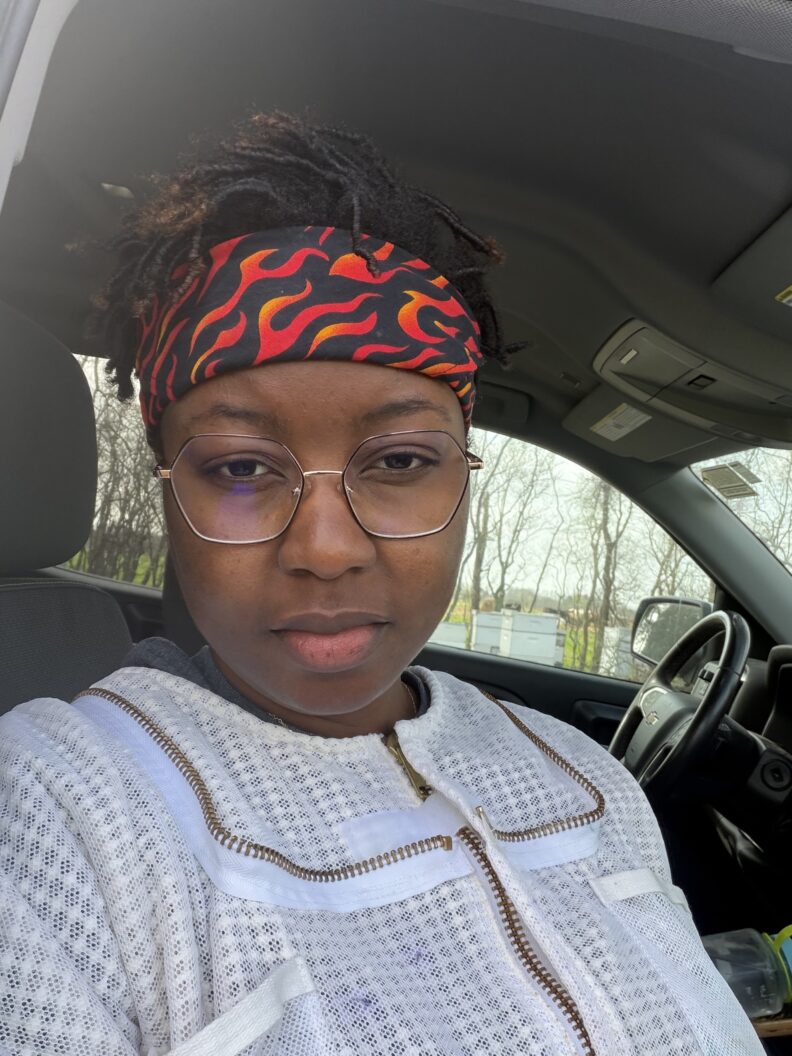
Lillian Blanchard, Ph.D. Student, Basu Lab
Lillian is originally from Raceland, Louisiana and received a Bachelor of Science in Biology with a Chemistry Minor from Louisiana Tech University in Ruston. Lillian’s past research projects studied freshwater macroinvertebrate drought resistance, as well as Odonata flight behavior and evolution.
Lillian’s research at WSU will focus on assessing mite management methods and products for hive efficacy. Lillian will also lead the PNW Pollen Atlas project as part of the Basu Lab National Pollen Atlas. Outside of research, Lillian enjoys fishing and cooking, and has a cat named Leroy.

Kate Atchison, Masters Student, Hopkins Lab
Kate Atchison received her Bachelor of Science in biology with a minor in environmental science at Portland State University. It was at Portland State that her interest in entomology was piqued during the development of her honors thesis on pollination dynamics of Mimulus guttatus. She also participated in a research project that assessed endophytic fungi for novel antibacterial properties.
Kate’s research at WSU focuses on comb sanitation effectiveness of Peracetic acid, ozone, and other chemical and physical treatments with the goal of determining effective methods of controlling and reducing pathogens to strengthen colony vitality.

Farewell to Riley Reed
After nearly a decade with the WSU Bee Program, we are saying farewell to Riley Reed as he begins an exciting new chapter as an Entomologist (Insect Identifier). While we are sad to see him go, we are grateful for the tremendous impact he has had on our program, the beekeeping community, and the many students and stakeholders he inspired along the way.
Riley first joined the program in 2017 as an undergraduate researcher and technical assistant, helping manage honey bee colonies, support queen breeding efforts, and contribute to research projects. Over the years, he grew into a respected researcher, educator, and outreach leader while pursuing his Ph.D. in Entomology at Washington State University.
His contributions to honey bee health and pollination research have been extensive. Riley played key roles in projects focused on improving vegetable seed pollination through honey bee nutrition, understanding honey bee health and foraging behavior, developing strategies for Varroa control, and investigating emerging honey bee pests in Washington State such as the small hive beetle. His work has resulted in numerous scientific publications, extension resources, presentations, and research grants that have strengthened both the science and practice of beekeeping.
Beyond his research accomplishments, Riley has boundless enthusiasm for insects and a true gift for sharing that passion with others. Whether he was leading facility tours, staffing outreach events with live arthropods, speaking in classrooms, educating beekeepers, or helping children discover the incredible diversity of insects, Riley brought energy, curiosity, and expertise to every interaction. His outreach efforts reached thousands of people and helped inspire the next generation of scientists, beekeepers, and insect enthusiasts. Riley’s dedication has been recognized through numerous awards, scholarships, fellowships, and research grants, including support from the Foundation for Food & Agriculture Research, the Washington State Beekeepers Association, and the USDA NIFA Biotechnology Risk Assessment Program.
As he moves on to his new role, we know he will continue making important contributions. Riley leaves behind a lasting legacy at the WSU Bee Program, and we are excited to see where his passion for insects, science, and public engagement takes him next. Please join us in thanking Riley for nearly 10 years of dedication and wishing him the very best in this next adventure. Congratulations, Riley, and thank you for everything you have done for the WSU Bee Program!

CALL FOR CITIZEN SCIENCE VOLUNTEERS
SURVEYS OF VARROA MANAGEMENT STRATEGIES AND MOTIVATIONS (Closing November 15):
Bri is looking for volunteers in Washington State to participate in a 3-year longitudinal survey-focused research project! She aims to conduct annual surveys with Washington State beekeepers, 2026 through 2028. The first survey will be a little longer and ask for foundational experiential and demographic information. I am interested in colony loss information, sources people use most to learn what they know about Varroa management, what strategies they employ, and how networks within and amongst beekeeping associations influence strategies used. This work will be crucial to understanding current Varroa management strategies that Washington State beekeepers are using. Later, participants will watch a new open-access 10-part video series about comprehensive Varroa management, titled HIVE PNW that will be released in December 2026. Then participate in two more surveys (one in 2027, one in 2028). To boost and retain participation, we will provide non-monetary incentives to everyone that completes each survey.
Directions to participate:
- Step 1: Navigate to this link first to read more about the project and if you consent to participate, enter contact information, and get a unique 3 or 4-digit identifier code. Keep and store your identifier code! This code will be used to answer three surveys (one in 2026, 2027, & 2028). This will help keep your identity separate from the answers you give but conserve an individual’s data over three years.
- Step 2: Navigate to the first survey by using this link. Use that 3 or 4-digit code from Step 1. This survey should take you less than 20 minutes. Once you complete it, she will send you a cool, uniquely designed magnet from the WSU Bee Program!
- Step 3: Watch the new video series that will be released on our YouTube channel in December 2026.
- Step 4: Answer the survey she sends you to fill out the 2027 and 2028.
- Please contact Bri if you have any questions – briana.price@wsu.edu

Washington Pollen Atlas is looking for at least ONE beekeeper from:
Chelan County, Cowlitz County, Grays Harbor County, Island County, Jefferson County, Kitsap County, Thurston County, Yakima County and Whitman County
The Washington Pollen Atlas is a part of the National Pollen Atlas and Nutrition Database that Dr. Priya Chakrabarti Basu created. The goal of this program is to create a searchable database with information about floral nutritional profiles, and what is in bloom and when!
What is involved?
- Install a pollen trap on your hive(s)
- Leave the trap on for 48 hours once a month
- After 48 hours, empty trap into labeled bag
- Store pollen in freezer
- Mail in, deliver, or be available for sample pick up every 2-3 months
What happens to the pollen you send in?
The pollen is weighed and color sorted using Pantone color matching, then pollen is subject to nutritional analyses, metabarcoding, and acetoylsis and imaging. Data about pollen color, flower origin, structure, protein and lipid content, and region collected is being compiled into a database that will become publicly searchable. Many thanks to the Washington State Department of Agriculture Apiary Advisory Board for funding the Washington Pollen Atlas initiative.
To sign up, please fill out this form linked here.
If you have any questions about this program, please email briana.price@wsu.edu. If you live outside of Washington State but are still interested in participating, please use the same link to sign up. Your efforts will help build the National Pollen Phenology Wheel database too! If you are not a beekeeper but wish to participate, please email briana.price@wsu.edu to request a separate form.
Do you want to get emails from us about events, volunteer opportunities, and more? Join our WSU Bee Program email list
Looking for speakers for an event? Check out our Request a Speaker page
Looking for more updates on beekeeper happenings in Washington? Check out the Washington State Beekeepers Association newsletters
Author: Bri Price, Honey Bee Program Extension Coordinator