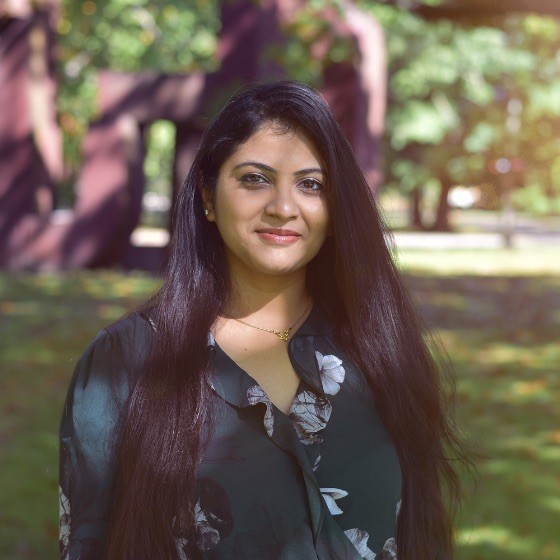
Join us in welcoming Dr. Priya Chakrabarti Basu to WSU!
We are over the moon about welcoming our new Assistant Professor of Pollinator Health and Apiculture, Dr. Priya Chakrabarti Basu! Priya is bringing some exciting ideas to the WSU Bee Program. She specializes in honey bee nutrition, impacts of pesticides and changing climate on honey bees, and honey bee behavior and biology. Check out this news article about her arrival to WSU, “New WSU bee expert to advance science, teach next generation about pollinators”, written by Scott Weybright.
Hap-bee New Year!
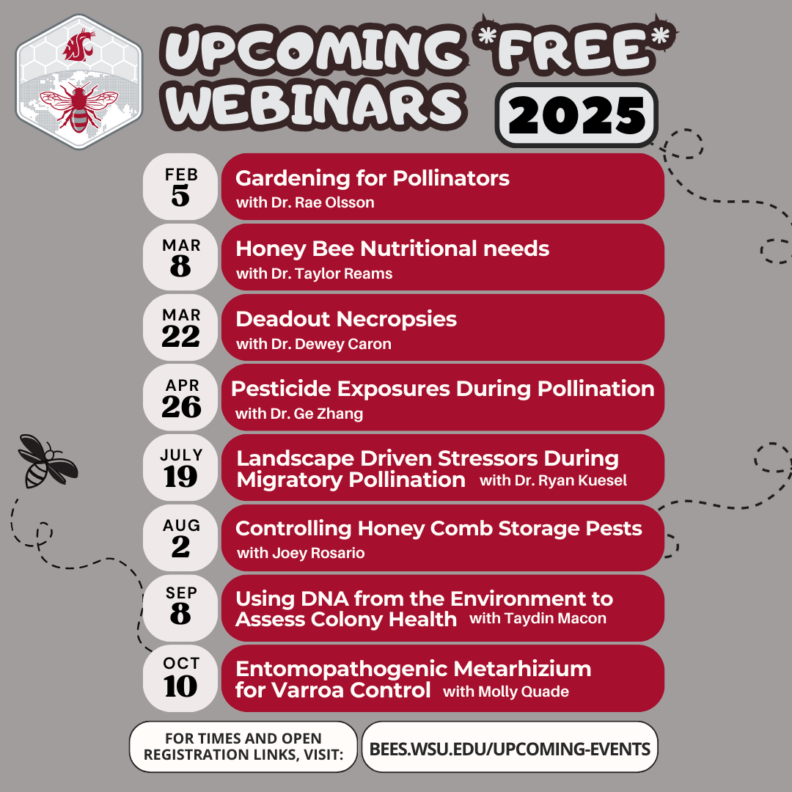
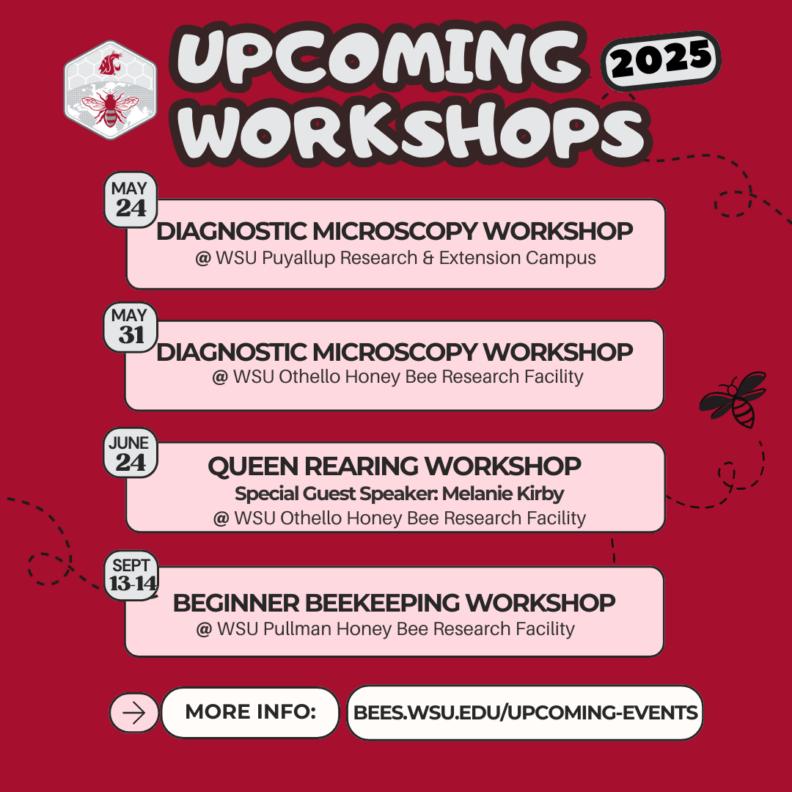
In late 2024, we distributed a survey to give beekeepers the opportunity to request workshops and training opportunities from our program. Based on your feedback, we are very excited to announce the agenda for 12 Bee Program events in 2025 (8 webinars and 4 workshops).
There will likely be EVEN MORE events in store, since Dr. Priya Basu has some exciting ideas too! For more information, please visit our Upcoming Events page.
REGISTER FOR OUR FREE WEBINARS HAPPENING IN FEBRUARY OR MARCH:
- Gardening for Pollinators with Dr. Rae Olsson , Feb 5th at 12pm PT -> Register Now
- Honey Bee Nutritional Needs with Dr. Taylor Reams , March 8th 11am PT -> Register Now
- Deadout Necropsies with Dr. Dewey Caron , March 22nd 4pm PT -> Register Now
WSU Bee Program is featured in CAHNRs News
In the newly published news article written by Seth Truscott, “New Spanish website improves access to WSU honey bee and pollinator resources“, you can read about what our bee program is doing to make WSU entomology resources more inclusive and accessible to a diverse public. In recently months we’ve created the new Washington State University Abejas melíferas y polinizadoras website, posting Spanish-language YouTube videos on honey bee pests, translating WSU Extension publications on pollinators, and creating a professionally produced video series in Spanish for commercial beekeeper training. None of these efforts would be possible without the help of Sandra Mina-Herrera, a doctoral student in the WSU College of Education. Thank you Sandra!
New faces in the WSU Bee Program!
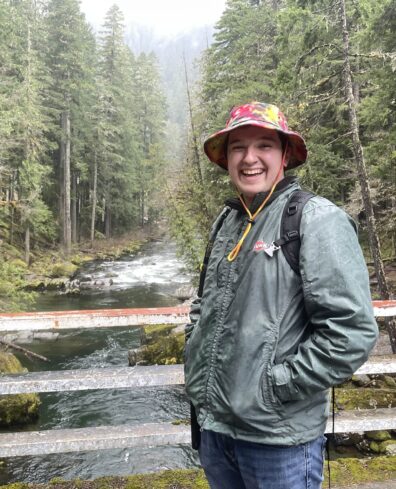
Jack Hollister, Agricultural Technologist
Jack previously worked as an Apiary Inspector for the Illinois Department of Agriculture and has been beekeeping on and off since he was 12. Jack joined the Hopkins lab to pursue a career in bee research and live closer to family in WA. His position, as an Agricultural Technologist, has many facets and he helps members of the bee program with their projects.
METARHIZIUM PROJECTS
Under the new management of Dr. Chelsea Abegg, many new projects are underway to test Metarhizium as a biological control for various honey bee pests including Varroa, wax moth, and small hive beetle. In recent lab or cage studies, WSU Bee Program has obtained evidence of significant virulence in Varroa mites and wax moth larvae. We’ve also found that Metarhizium is not likely to be detrimental to honey bees at the pupal stage. New fungal strains are being prepared for heat tolerance and virulence development, and trials to increase mass production of spores and extend shelf life are underway. Investigation of potential Metarhizium applications is also underway; equipment to test spore dispersal in full sized hives has been ordered. WSU Bee Program welcomes three new team members this month to work on the Metarhizium projects!
Austin Thivierge, 2025 Ignite Scholar Recipient
An accomplished Ignite scholar will investigate the impact Metarhizium has on honey bees. His work will identify honey bee immune responses via RNA upregulation and the risk Metarhizium may cause to honey bees at all life stages.
Lydia Sawyer, Undergraduate Researcher
Lydia is a junior undergraduate at Washington State University pursuing her passions for entomology, forestry, and restoration ecology. Originally from New England, she spent six months living abroad in Iceland, where she deepened her appreciation for environmental conservation. At WSU, Lydia conducts specimen identification research through the MT James Entomology Museum and works as a lab technician in the Metarhizium Lab, focusing on innovative solutions for pollinator health and biodiversity conservation. Her work and hobbies reflect a passion for restoring ecosystems and understanding the intricate relationships between species and their environments. With six year of beekeeping experience and two years of experience working in a genetic laboratory, Lydia will help develop methods and protocols for the implementation of Metarhizium in honey bee colonies.

Liam Dubar, Metarhizium Lab Technician
Liam graduated from WSU with a Bachelor’s of Science degree. Liam has a background as a technical assistant for the WSU Department of Horticulture and for WADDL in the Department of Serology. In his free time, Liam enjoys working out, going on hikes, and spending time with friends. This newly graduated biologist, with a special focus on pathology, will be assisting in the mass production of Metarhizium spores, the development of application methods, and maintaining colonies of small hive beetles, wax moths, and honey bee colonies to be used in virulence and efficacy trials.
PCB LAB
Alongside the recent arrival of Dr. Chakrabarti Basu, two Ph.D. students from Priya’s lab at Mississippi State University recently transferred to Washington State!
Janae Becher, Ph.D. Student
Janae Becher is a first-year Ph. D student under Dr. Priya Chakrabarti Basu at WSU studying bee nutrition. Janae graduated in 2024 with a B.A. triple major in Biochemistry, Environmental Studies, and German from Augustana University, SD. At Augie, Janae facilitated the start of the bee program and continues to be an advisor and mentor for the undergraduate student-led program. While at Augustana, Janae performed experiments characterizing the honeybee gut microbiome and profiling the composition of bee bread during its formation. At WSU, Janae will investigate products bees consume and manipulate, both compositionally and microbially. Janae moved with Priya from MSU, where she started working on different pollinator projects. She is excited to move her project fully to WSU and start collaborating with beekeepers and farmers in the state on different aspects of bee nutrition.
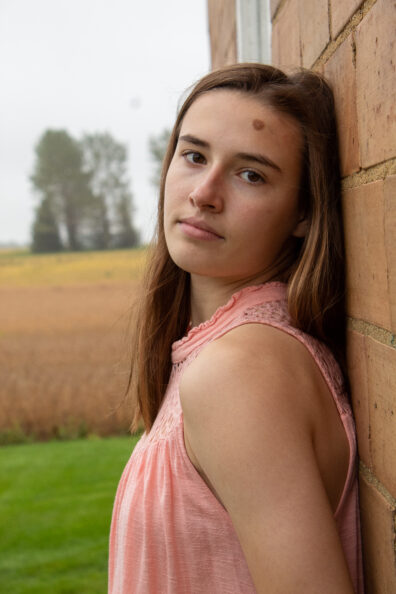
McKaela Whilden, Ph.D. Student
Mckaela Whilden is a second-year doctoral student at Washington State University, working under the mentorship of Dr. Priya Chakrabarti Basu. Mckaela’s passion for apiculture began during her undergraduate studies at Texas A&M University, where she worked as a lab technician studying wild honey bee diseases. She then earned her master’s degree at Mississippi State University, where she worked on several projects involving pollinators, but primarily studied European Foulbrood (EFB). Now, at WSU, Mckaela will collaborate with researchers across Washington, Oregon, and California to better understand the prevalence and impact of EFB during blueberry pollination. In the coming year, she will travel to Mississippi to conduct sampling for EFB, broadening her research to explore this disease across the United States, beyond the Pacific Northwest.

Farewell Dr. Ge Zhang!
Dr. Ge Zhang recently resigned from his Assistant Research Professor position in our entomology department to move into his new role as Professor at Shandong Agricultural University, Shandong Province, China. Ge has been a great contributor and scientist, and he will be missed. Fortunately, he will continue to collaborate with Dr. Hopkins and our bee program scientists after he leaves for China. You will be missed!
2025 American Beekeeping Federation (ABF) & American Bee Research Conference (ABRC)
This annual conference duo was in Reno, Nevada this year. A handful of our bee program team members attended and presented about various research areas.

Dr. Priya Chakrabarti Basu presented a comprehensive overview of bee nutrition, and sterol nutritional physiology in bees fed multi-floral diets. Bees cannot metabolize their own sterols, such as 24-methylenecholesterol, that are critical for development, so proper nutritional composition of the pollen they consume is imperative to procure necessary nutrients. Priya described one of the caged experiments her lab worked on at Mississippi State University. In a laboratory setting, honey bees and bumble bees were fed sucrose only or sucrose and pollen, and the researchers monitored bee survival, consumption rate of the pollen diet provided, and did lipid-omics to quantify sterols over a two-week period. Results of this study indicated that pollen consumption decreased in both bee species over time, but sucrose consumption only decreased in the bumble bee group. Among many of the sterols within the pollen diet, 24-methylenecholesterol was found in the highest concentrations in honey bees and bumble bees. There is more work being done to further investigate nutritional physiology and foraging behavior.
Ph.D. candidate, Riley Reed, presented about the impact of supplemental feeding on honey bee foraging habits in carrot seed. Foraging honey bees transferring pollen between fields is a substantial concern for carrot seed producers. His research tested the impact of supplemental in-hive feeding on the foraging behavior of honey bees in a carrot seed field. Foraging behavior was measured by entrance activity monitors, and pollen samples were collected to track foraging activity and pollen composition. The results showed that supplemental feeding did not significantly impact foraging behavior in this system. Although these findings were contrary to the intended purpose, they demonstrate that beekeepers can feed colonies during this nutritionally poor period without negatively impacting pollination.
Master’s Student, Joey Rosario, presented a poster about application methods of Bacillus thuringiensis (Bt) for effective wax moth control. Wax moth larvae significantly affect beekeeping equipment by damaging wax combs with their tunneling and frass. Her research evaluates the efficacy and practicality of a biological larvicide, Certan, by spraying individual frames on all sides, or spraying in-between frames within hive boxes. After either application method, wax moth infestation was monitored. Both application methods significantly reduced wax moth infestation compared to untreated controls. However, applying Certan between frames was more efficient and eliminated the need to treat each frame individually.
Master’s Student, Molly Quade, presented about the virulency of entomopathogenic Metarhizium for Varroa control. There is a growing demand for alternative non-chemical treatments for Varroa control. Metarhizium brunneum is an entomopathogenic fungus used commercially as a mycoinsecticide for a variety of agricultural arthropod pests. Although, the conditions within a honey bee hive space require a more heat-tolerant and virulent strain of this fungus. In her talk, she shows the mortality of Varroa that were externally treated with M. brunneum spores and maintained on honey bee pupae under laboratory conditions. The results of that experiment examine the potential for a new sustainable integrated pest management treatment for Varroa.
Do you want to get emails from WSU Bee Program about events, volunteer opportunities, breeder queen sales, and more?
Join our WSU Bee Program email list by filling out this form.
Looking for speakers for an event or bee club meeting?
Check out our Request a Speaker Page.
Looking for more updates on beekeeper happenings in Washington? Check out the Washington State Beekeepers Association newsletters!
Author: Bri Price, Honey Bee Program Extension Coordinator