A Buzzing Success: The 2026 COLOSS North America Conference Brings Energy and Expertise Together
The 2026 Local COLOSS North America: “Nutrition, Landscape Change and Honey Bee Health: A Transatlantic Dialogue” conference, organized by COLOSS North America bee nutrition taskforce chair Dr. Priya Chakrabarti Basu, has officially concluded. We were thrilled to host the first-ever North American COLOSS event on June 6-12, 2026 in Pullman WA. This hybrid event connected over 100 scientific researchers, beekeepers of all levels, veterinarians, Extension agents, and other agricultural professionals across six continents. The participants were from diverse backgrounds such as researchers (prominent university researchers, USDA and other research institutes), beekeepers and beekeeping associations (American Beekeeping Federation, Canadian Honey Council, American Honey Producers Associations), queen breeders, veterinarians and industry. We thank the COLOSS EC for supporting this event and our generous sponsors, including the Washington State Beekeepers Association. We also thank the Bee Nutrition Task Force (NUTRI TF), the BeeScholars TF and Working Group 3 and Working Group 6 of the BeSafeBeeHoney – COST Action CA22105 for co-organizing and supporting this event. We had 136 presenters (oral and poster), in-person and online. Key administrative personnel from the College of Human and Natural Resource Sciences (CAHNRS), including new the dean Dr. Raj Khosla attended and spoke at the event. On top of many interesting scientific presentations, we facilitated several workshops and tours.
Local COLOSS North America 2026 Highlights
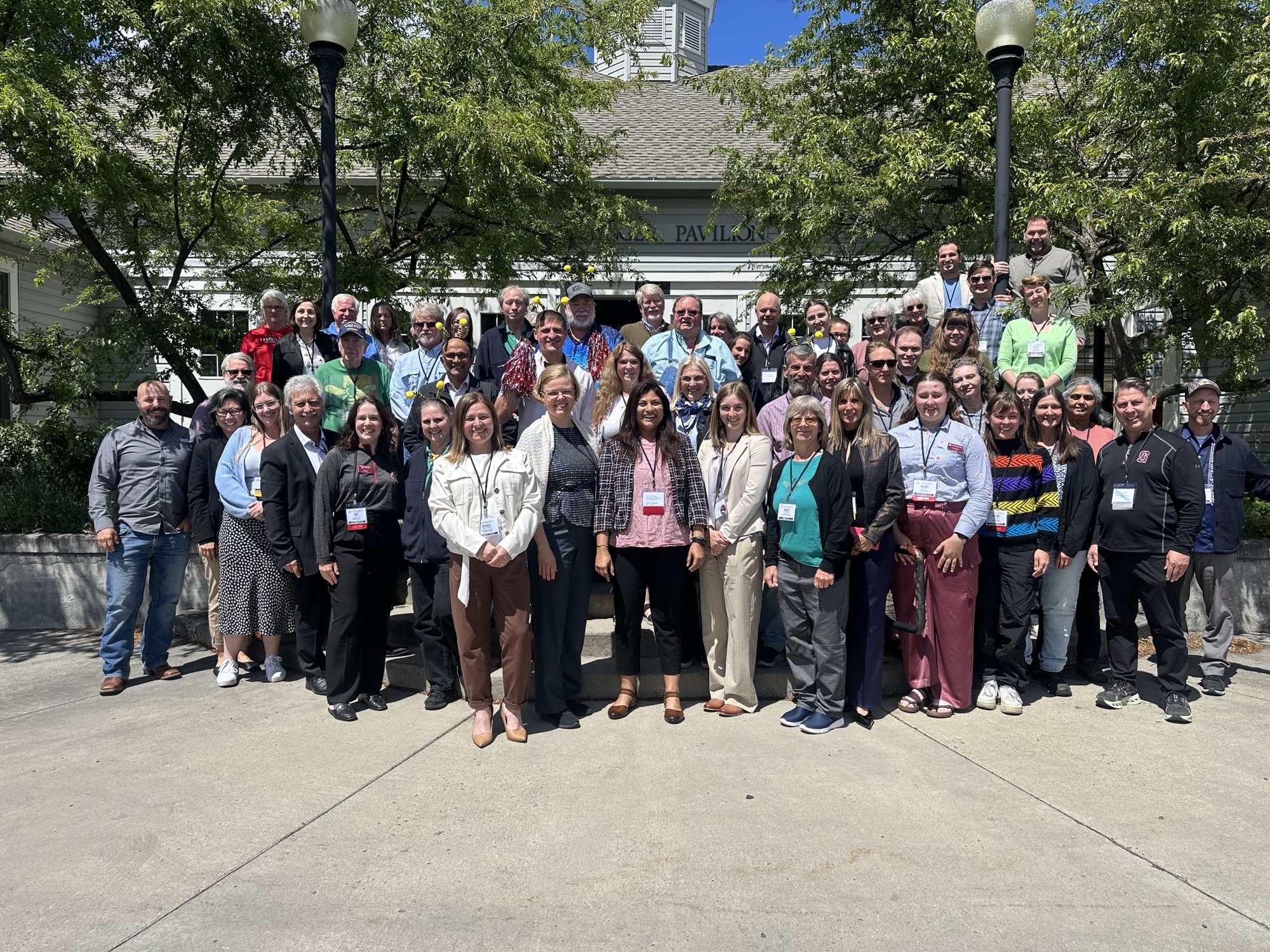
Conference attendees and WSU Bee Program team members in front of the Ensminger Pavilion during the 2026 Local COLOSS North America Conference in Pullman, WA (June 6-9, 2026).

Conference attendees and WSU Bee Program team members in front of the Ensminger Pavilion during the 2026 Local COLOSS North America Conference in Pullman, WA (June 6-9, 2026).
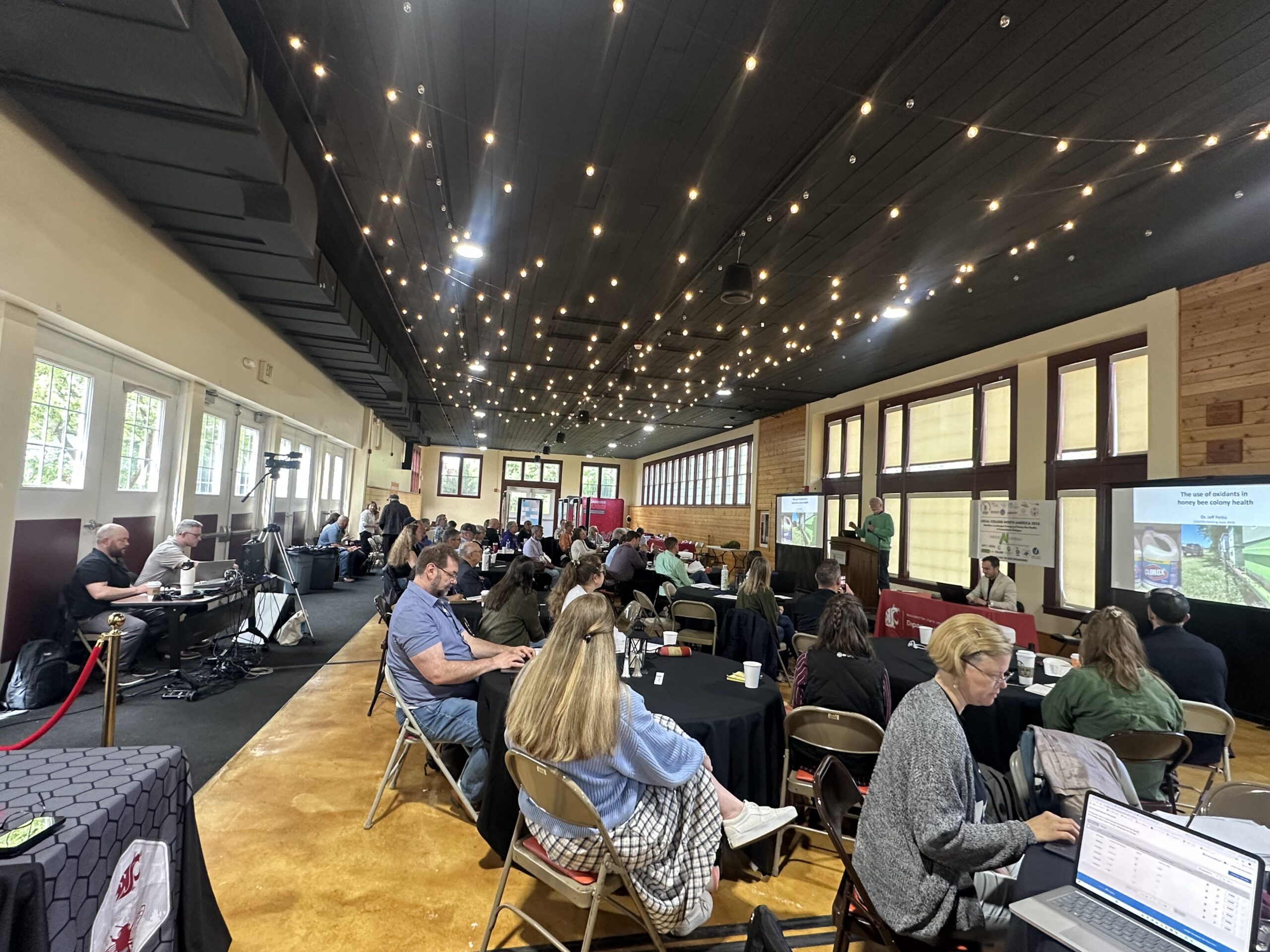
The 2026 Local COLOSS North America Conference in Pullman, WA (June 6-9, 2026) in Ensminger Pavilion.

The honey bee colony disease inspection workshop facilitated by Dr. Ramesh Sagili (Oregon State University Honey Bee Program) and Mckaela Hobday (WSU Bee Program) at the 2026 Local COLOSS North America Conference in Pullman, WA (June 7, 2026) in Ensminger Pavilion.
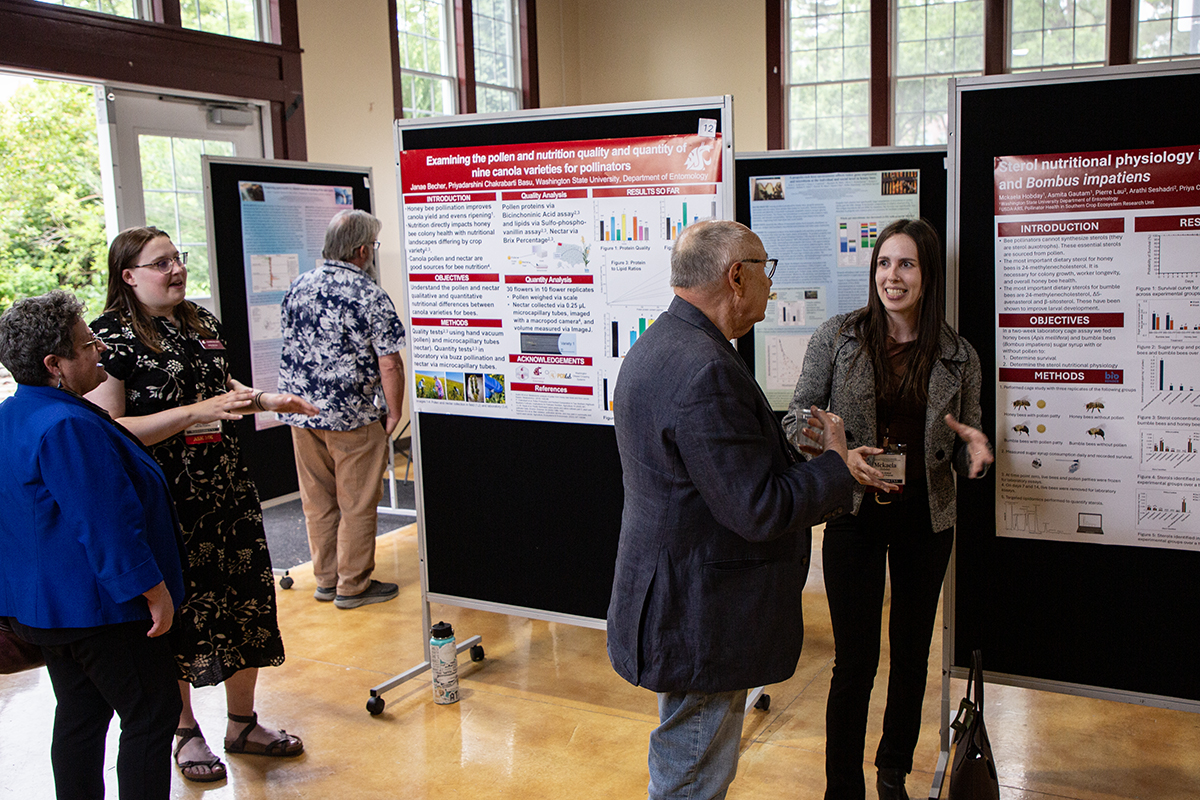
Janae Becher (left) and Mckaela Hobday (right) presenting at the poster reception during the 2026 Local COLOSS North America Conference in Pullman, WA (June 8, 2026).
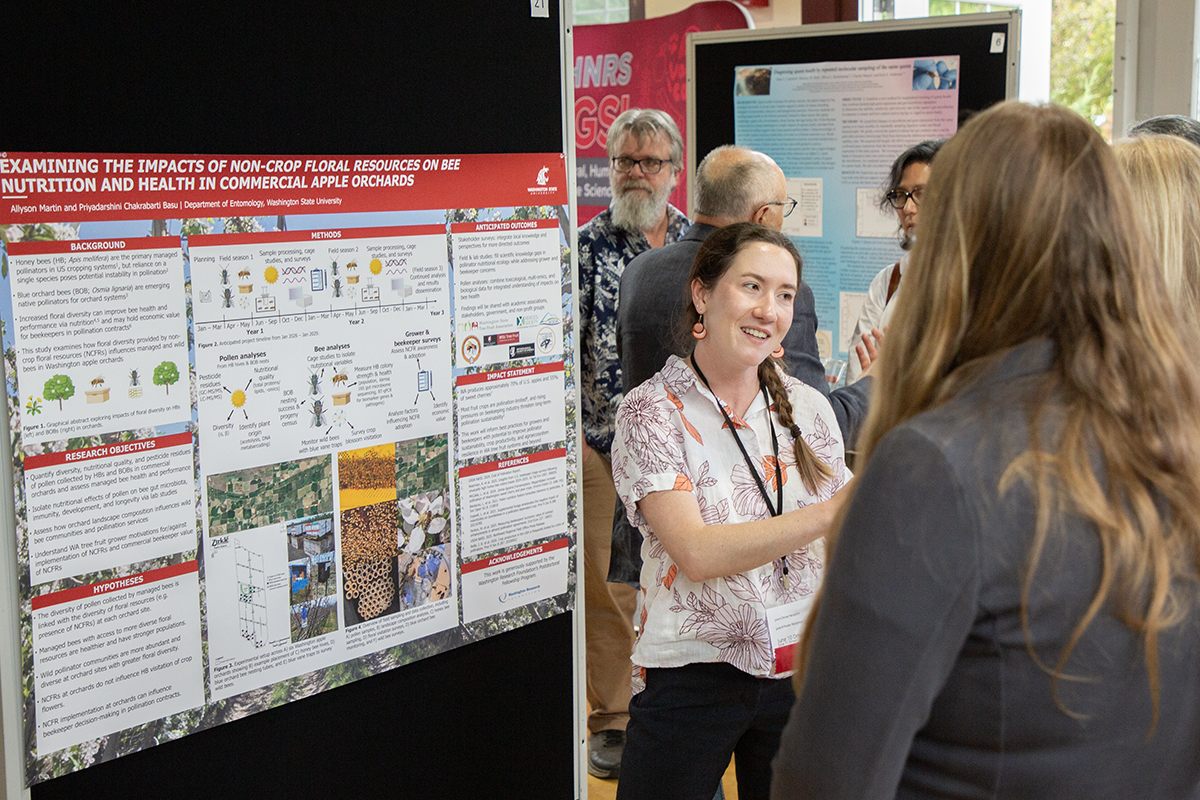
Allyson Martin presenting at the poster reception during the 2026 Local COLOSS North America Conference in Pullman, WA (June 8, 2026).
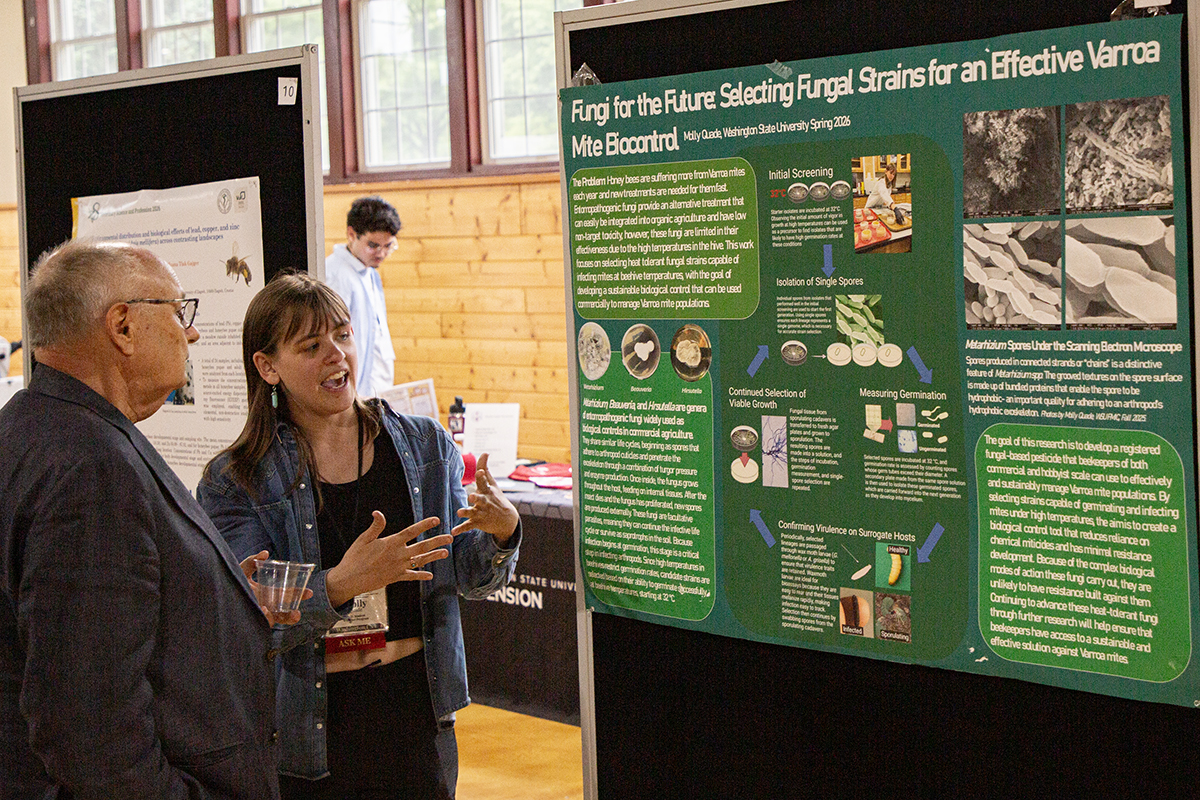
Molly Quade presenting at the poster reception during the 2026 Local COLOSS North America Conference in Pullman, WA (June 8, 2026).

Kiersten Ritchie, Ph.D. demonstrating semen collection at the instrumental insemination workshop during the 2026 Local COLOSS North America Conference in Pullman, WA (June 9, 2026).
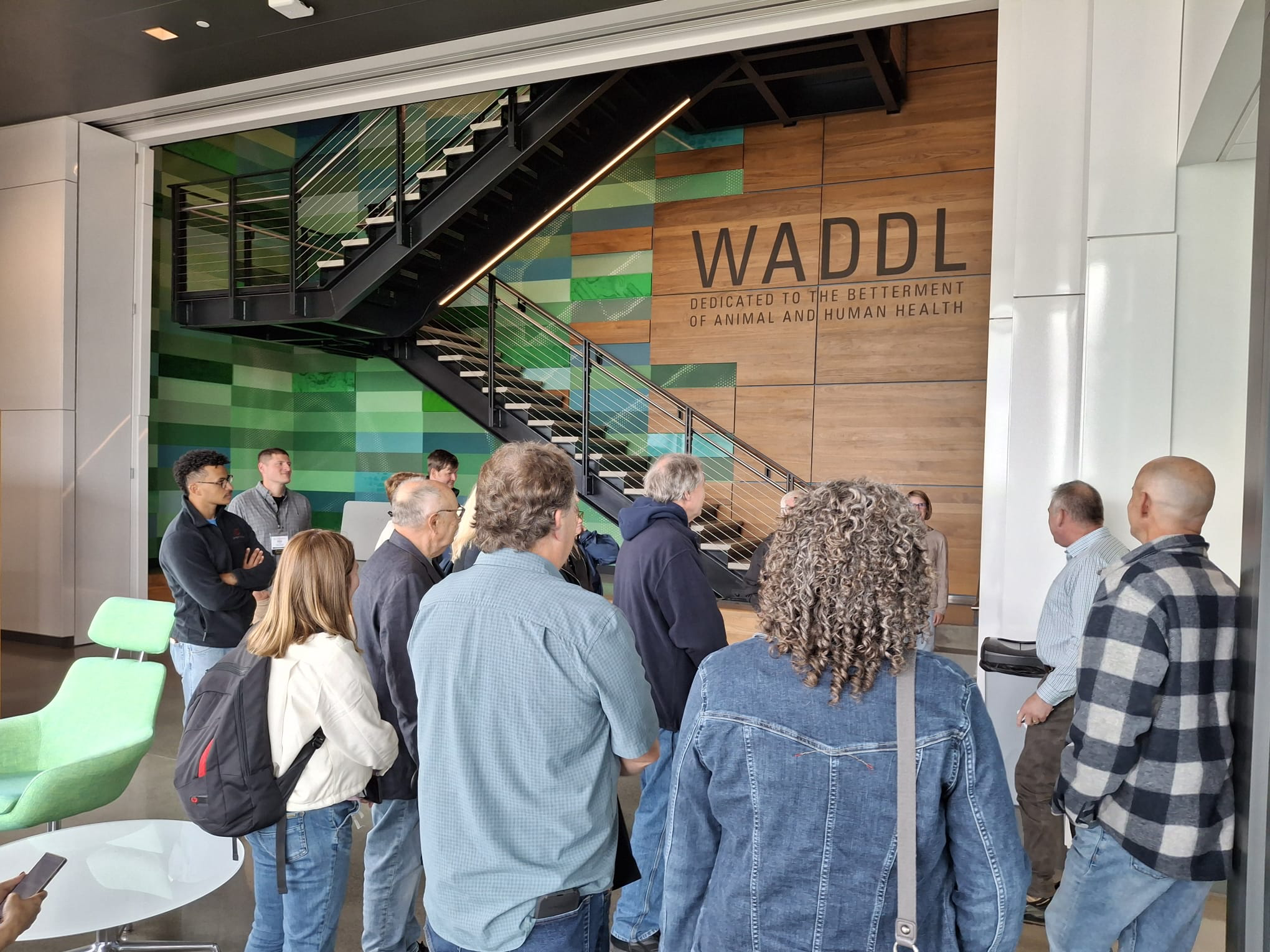
Washington State University’s (WSU) College of Veterinary Medicine comprehensive tour during the 2026 Local COLOSS North America Conference in Pullman, WA (June 9, 2026).
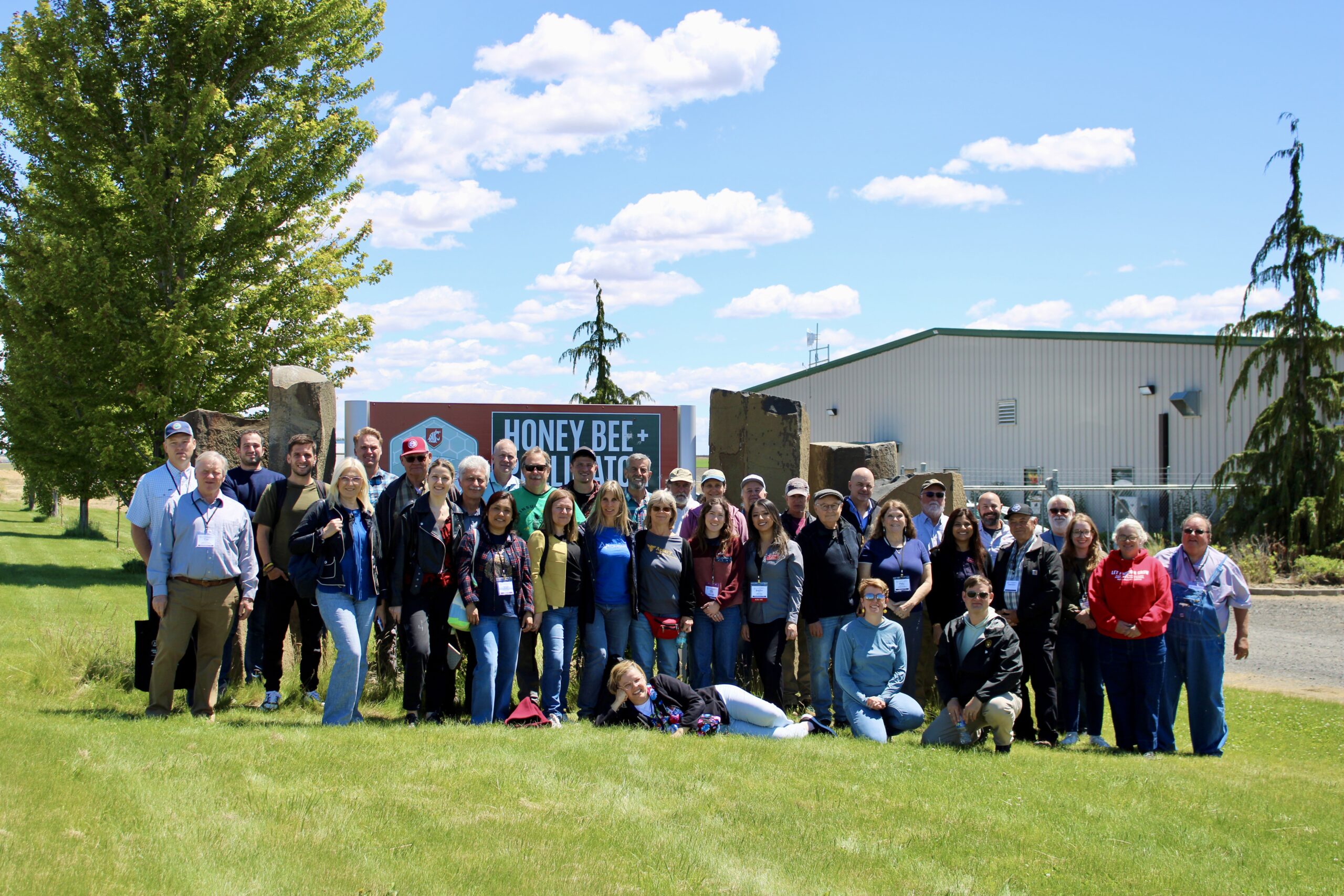
Beekeepers, attendees, and WSU Bee Program team members at 2026 Local COLOSS North America Commercial Beekeeper Tour on June 10, 2026.

Attendees and WSU Bee Program team members learning about carrot seed pollination services at 2026 Local COLOSS North America Commercial Grower Tour on June 11, 2026.

Geographical maps showing origin of attendee who participated in 2026 Local COLOSS North America Conference in Pullman, WA (June 6-9, 2026)
🐝June 8, 2026 – Dr. Ramesh Sagili (Oregon State University Honey Bee Program) and Mckaela Hobday (WSU Bee Program) coordinated in-hive diseased colony inspections to give people a hands-on experience with a live colony showing symptoms of chalkbrood, European foulbrood, or American foulbrood.
🐝June 9, 2026 – Dr. Brandon Hopkins, Dr. Kiersten Ritchie, and Molly Quade (WSU Bee Program) talked about the instrumental insemination process that we employ in our WSU Breeding Program and demonstrated anesthetizing a honey bee queen, collecting semen from drone (male) honey bees, and inseminating a queen. Dr. Craig McConnel and Alexandra Miller from Washington State University’s (WSU) College of Veterinary Medicine provided a comprehensive tour of the college’s facilities and highlighted its extensive capabilities. Participants greatly appreciated the opportunity to visit state-of-the-art facilities, including the Washington Animal Disease Diagnostic Laboratory (WADDL), as well as to engage with veterinarians from Washington and around the world during the tours.
🐝June 10, 2026 – Attendees traveled to our Othello WSU Bee Program Facility amid pollinator-dependent agricultural systems to hear about commercial beekeeper operations from, Eric Olson (Olson’s Honey), Tim Hiatt (Hiatt Honey Co.), and George Hansen (Foothills Honey Company). Dr. Steve Sheppard (WSU Bee Program) also talked about his experiences with collecting honey bee germplasm from European countries and the cryopreservation process as part of our WSU Breeding Program. To end the day, attendees visited Bud Wilhelm’s (Royal Honey Co.) commercial colonies that were pollinating canola, and his team shared their experience with providing pollination services and how their operation runs.
🐝June 11, 2026 – Attendees traveled to Othello to visit commercial grower operations including Zirkle Fruit (apples), Bejo Seeds (carrot seeds), and the Klein Family at Homestead Family Grain (winter canola). Zirkle Fruit is one of the largest family-owned fruit growers in Washington. While visiting Zirkle Fruit’s operation, Zirkle entomologist and WA Tree Fruit Research Commissioner, Teah Smith shared her experience as an entomologist and agricultural consultant, and about their efforts to promote regenerative agricultural strategies, beneficial insects, and organic management in their tree fruit systems. Brandon Kania from Bejo Seeds shared some of the challenges with producing hybrid carrot seeds including timing for bee pollination services to ensure crucial cross pollination needed for seed production. Jake Klein hosted the winter canola tour and shared his experience and insight on farming canola and other crops and how reliance on rainfall is a critical determinant of his crop success.
The WSU Bee Program is working closely with commercial growers and beekeepers across Washington to tackle some of the challenges they face and finding ways to promote stronger bees and crop yield.
Big Kudos for Outstanding Funding Achievements this Summer!
Cashup Davis Family Endowed Fellowship Recipients
Dr. Priyadarshini Chakrabarti Basu is a recipient of the inaugural Cashup Davis Family Endowed Fellowship to lead the development of the Washington State Apiary Action Plan (AAP). This collaborative initiative brings together Dr. Craig McConnel of the WSU College of Veterinary Medicine and Ellen Miller of the Washington State Beekeepers Association (WASBA). WASBA is generously contributing matching funds, resources, and expertise to strengthen and expand the impact of the AAP. The Apiary Action Plan aims to support and enhance youth beekeeping programs across Washington state, provide specialized training opportunities for veterinarians in honey bee health, and foster stronger partnerships between beekeepers and veterinarians. Through these efforts, the AAP seeks to advance pollinator health, improve apiary management practices, and strengthen the long-term sustainability of Washington’s beekeeping community.
Dr. Rae Olsson also received one of the inaugural Cashup Davis Family Endowed Fellowships. Dr. Olsson will be reestablishing the Forensic Entomology program at WSU through the creation of the Forensic Investigation of Entomology in Life and Death (FIELD) lab. This lab will train students in forensic science methods, fill in research gaps pertaining to the ecology of forensically relevant arthropods in the Pacific Northwest, and will provide expertise and support for law enforcement and death investigators throughout the region. Although this work deviates from their previous efforts supporting pollinators, this program will be the only one of its kind in the entire PNW region, and will bring Forensic Entomology back to WSU for the first time since the mid-90s.
WSU Entomology Undergraduate Internship Program Awards
With support from CAHNRS USDA Hatch capacity grant funds, the WSU Entomology department supported five $3000 grants to support undergraduate interns in the summer of 2026. Each undergraduate intern will assist graduate students with projects or conduct independent research projects under the supervision of graduate students. Graduate students were asked to apply by submitting a project description and estimated timeline of duties. Congratulations to WSU Bee Program Ph.D. students or candidates, Taydin Macon, Riley Reed, Janae Becher, and Mckaela Hobday for being four of the five recipients of these competitive departmental grants!
Western Sustainable Agriculture Research and Education (WSARE) Graduate Student Grant Recipients
Taydin Macon, Ph.D. Candidate “Comparing Environmental DNA Collection Methods as a Honey Bee Pest and Pathogen Detection method in Overwintering Facilities” [Excerpt from Macon’s proposal]: Biomonitoring should be an essential cornerstone of commercial honey beekeeping practices (Apis mellifera), ensuring colonies remain healthy in pollination and honey production, and is a key component in the effort to prevent novel pest species from invading colonies (ex: Northern Giant Hornet, Yellow-legged hornet, Tropilaelaps species). Biomonitoring is done throughout the year in many ways (mite shakes, sticky cards, hive inspections, uncapping brood, etc.). However these methods are costly, time consuming, and are only performed on a fraction of colonies within one operation at a time. In addition, colonies in a single operation are often spread across hundreds of miles, making it strategically difficult to get an overview of an operation’s health. During the winter, however, 30-40% of all US colonies are placed at indoor storage facilities, making it the only time of year when all colonies of a single operation are localized in a single controlled environment. This presents a novel opportunity to conduct extensive diagnostic testing on thousands of colonies at once via environmental DNA and RNA (eDNA/RNA). This project aims to explore and develop eDNA/RNA collection methods beginning with small scale storage containers starting in September of 2026 with the intent on deploying these methods in a large-scale commercial facility in November-December of 2026.
Mckaela Hobday, Ph.D. Student “Understanding the nutritional landscape of blueberry pollination systems to enhance commercial honey bee colony health” [Excerpt from Hobday’s proposal]: Commercial blueberry pollination heavily relies on honey bees, yet beekeepers routinely report that colonies return from blueberry pollination weakened and symptomatic of stress or disease. Poor nutrition can exacerbate disease susceptibility and impair colony growth and brood development, contributing to elevated colony losses. Despite Washington’s scale of blueberry production (over 18,000 acres of blueberries grown annually), we lack cultivar-specific data on pollen and nectar quality and quantity, and an understanding of what alternative forage is available to bees within these pollination landscapes. This project will thus address these gaps in research and (1) characterize the floral resources that honey bees forage on before, during, and after blueberry blooms across four farms that vary in region (Eastern vs. Western Washington) and in the availability of nearby supplemental forage (with and without); and (2) quantify pollen and nectar nutritional metrics (protein, lipid and sugar content) for multiple blueberry cultivars. Using standardized laboratory assays and pollen identification methods, we will connect forage access and cultivar quality to indicators of colony nutritional intake. Deliverables include cultivar-specific recommendations for supplemental feeding, context-specific stocking-rates, and outreach through beekeeper association talks, grower field days, and research and extension publications.
Janae Becher, Ph.D. Student “Understanding canola cropping systems for enhancing stakeholder management strategies: from pests to pollinators and beneficial arthropods” [Excerpt from Becher’s proposal]: Canola contributes over $1 billion annually to the U.S. economy. With over 80,000 acres in the region, canola acreage has been steadily increasing in the Pacific Northwest. While canola can self-seed, pollinators have been shown to improve crop yield, with reports suggesting bees are essential for canola hybrid seed production. Canola also produces pollen and nectar and is used as supplemental forage plants for bees. Increasingly, beekeepers and growers seek to understand the nutritional value of pollinated crops, such as canola, as well as the pests and beneficial arthropods in such cropping systems for the most efficient management strategies. To optimize canola production systems and enhance cooperation among canola growers and beekeepers, this proposal, spanning two years, seeks funding to address three stakeholder needs and concerns: (1) Examine the impacts of canola bloom on bee nutrition. We will select three distinct canola production landscape types and assess the impacts of the surrounding landscape on pollination and bee nutrition. (2) Examine the impacts of different canola cultivars on bee nutrition. We will assess the quantity and quality of canola pollen and nectar available to bees across different canola cultivars. (3) Enhance management strategies in canola production systems by mapping the beneficial arthropods and pests. We will map the presence and abundance of pests and beneficial arthropods across selected landscapes over time to understand management practices. Ultimately, our aim is to improve canola yield by understanding the pest-pollinator-beneficial arthropod dynamics to suggest integrated pest and pollinator management practices.
Molly Quade, Ph.D. Student “Examining Effects of Fungal Miticides on Varroa Mite Populations and Honey Bee Health” [Excerpt from Quade’s proposal]: This project evaluates entomopathogenic fungi (EF) as a sustainable biological control for Varroa mites, a leading cause of honey bee colony losses. Miticides remain the primary management tool, but resistance is widespread and concerns persist regarding residue contamination and long-term colony health. EF offer a promising alternative; however, their effectiveness has been limited by the high temperatures inside beehives. To address this limitation, thermally tolerant fungal strains developed through laboratory selection will be tested in field colonies to determine their ability to reduce Varroa populations under real-world conditions. Colonies will be monitored for mite mortality using standard assessment methods, and fungal strains will be re-isolated from infected mite cadavers to further select for virulence and host specificity in subsequent trials. In addition to evaluating efficacy against Varroa mites, this project will examine potential effects of fungal exposure on honey bee health. Adult worker bees will be sampled before and after treatment, and RNA sequencing will be used to assess changes in gene expression associated with immune function and overall colony health. This approach will determine whether fungal treatments provide secondary benefits beyond mite suppression, such as by priming the bee immune system. This research aims to advance development of a residue-free, sustainable Varroa management tool. Results will contribute to sustainable apiculture and provide beekeepers with a practical strategy for managing honey bee parasites.
Read it here first! New peer reviewed publication in Journal of Pest Management Science
Authors: Briana E. Price, Ryan Kuesel, Taylor Reams, Brian Manley, James Masucci, Brandon K. Hopkins
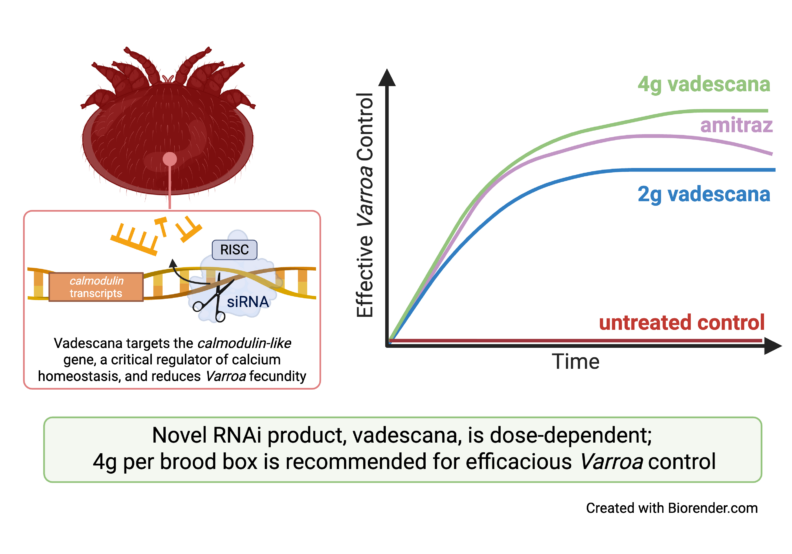
A novel dsRNA-based product, containing a molecule called vadescana, interferes with Varroa destructor (Anderson and Trueman) fecundity and shows promise as a new biopesticide strategy for Varroa management. This study defines optimal dosing rates for vadescana in the field by evaluating efficacy in full-sized honey bee (Apis mellifera Linneas) hives to contribute essential preliminary information for vadescana development and implementation. Additionally, this study examined the impacts of various doses of vadescana on colony health by counting frames of bees and brood.
A budding partnership between the Washington State Beekeepers Association, the Sustainability in Prisons Project and the WSU Bee Program
Written by Mckaela Hobday
This month, WASBA had the opportunity to bring hands-on honey bee education and training to an unexpected setting: a Washington State Prison. At Coyote Ridge Corrections Center, staff volunteers, alongside WASBA, Sustainability in Prisons Project (SPP) members, and WSU researchers hosted a two-day event with a beginner beekeeping course and a queen rearing workshop for the Coyote Ridge Beekeeping Club.
The Coyote Ridge Corrections Center Beekeepers are resilient despite numerous hurdles in beekeeping. It is incredibly difficult for incarcerated individuals to receive the approval to keep bees, and it is an even greater challenge to source honey bees, equipment, and the knowledge necessary to successfully keep bees. Through several volunteers at Coyote Ridge Corrections Center and donations from WASBA, SPP, and Mann Lake, the Coyote Ridge Beekeeping club is quickly growing their apiary. This club now has three honey bee colonies that successfully overwintered! Their colonies were strong enough to make splits, and now they have five colonies. WASBA education chair, Sandy Fanara, started the two-day training with the WASBA beginning beekeeping course. The all-day lecture and demonstration class was held in a room full of staff and incarcerated students. While the beginning beekeeping content is interesting, it was the vigorous discussion of all present that made the hours go by quickly.
Since this beekeeping club has been increasing the number of colonies they maintain, it was the perfect time to host a workshop on queen rearing to ensure colony establishment and survival. Three honey bee researchers from the WSU Department of Entomology had the opportunity to teach a graft-free queen rearing workshop at Coyote Ridge Corrections Center. Two members from Dr. Priya Chakrabarti Basu’s lab: Dr. Allyson Martin, post-doctoral researcher, and Mckaela Hobday, Ph.D. student, and one member from Dr. Brandon Hopkins lab, Randall Hobday, research technician, led this workshop. Through an interactive presentation, these three researchers were able to adapt their workshop to the knowledge and interests of the Coyote Ridge beekeeping club.
During the workshop, participants learned about several graft-free methods of queen rearing, including options that do not require specialized equipment. They had many insightful questions about honey bee biology, queen development and general management. Researchers were allowed to bring in teaching colonies (deep boxes containing wooden frames with images that display what we may find when inspecting a colony) and typical queen rearing tools.

Members of WSU’s honey bee research program had nothing but positive things to say about this experience. Members of Coyote Ridge Correction Center Staff were so passionate about the beekeeping club. It is very clear that they want their honey bees to thrive just as much as the beekeepers do. The Coyote Ridge beekeepers were respectful, attentive and full of gratitude. They let us know about the struggles they experience as a club, and they spoke about their dreams of continuing beekeeping for many years to come. Members of the WSU honey bee research program love participating in outreach events. We love teaching all of our Washington beekeepers about keeping healthier bees, and incarcerated beekeeping clubs are no exception. Through the collaboration with SPP, nine out of ten of the Washington State Prisons currently have a beekeeping club, and we hope to provide beekeeping education for all of these clubs.
Once the queen rearing presentation was over, WASBA and SPP held a small ceremony to present the CRCC Beekeepers with the WASBA Facility of the Year Award, which had been announced at the October 2025 WASBA Beekeeping Conference. CRCC received the award because of their resilience and perseverance in light of extremely difficult beekeeping conditions. Each of the participating beekeepers from 2025 were presented with an award certificate and the CRCC name was added to the plaque. After meeting the Coyote Ridge beekeepers, we had the special opportunity to visit their apiary, where we saw beautifully maintained equipment, innovation to combat inaccessibility to specific equipment, and beautiful honey bees pollinating the flowers the club established.
CRCC’s beekeeping program is a part of SPP. SPP is a partnership between The Evergreen State College (Olympia, WA) and the Washington Department of Corrections. SPP’s mission is to bring science, nature, and environmental education into prisons. SPP has partnered with WASBA for over 10 years to offer beekeeping education and experiences to incarcerated people in Washington. This partnership is one of SPP’s most successful collaborations with over 657 Beginner Beekeepers, 444 Apprentice Beekeepers, and 7 Journey Beekeepers. At CRCC, 2 incarcerated beekeepers are expected to reach journey level within the next year. With WASBA’s partnership, WSU’s support, and the emergence of more journey level incarcerated beekeepers, there is no sign of this program slowing down. This type of work can only occur due to the care, dedication, and generosity of beekeepers around the state who are willing to share their time and expertise with incarcerated beekeepers.
Programs like this demonstrate how educational outreach can create meaningful experiences in diverse settings. As this partnership continues to grow, organizers hope to expand opportunities for future workshops centered around beekeeping, pollinator health and workforce development. In many ways, this collaboration served as a reminder that caring for honey bees can inspire resilience, innovation, and learning. We understand the importance of investing in both people and the environment, and through this partnership, we are grateful to do both.

Pollinator Week Festivities in eastern and western WA
Thank you to Mobius Discovery Center for hosting Pollinator Day on Saturday, June 13th 2026 from 10am – 1pm in Spokane, WA! People enjoyed hands-on activities and engaged with pollinator experts to learn about the essential role these species play in sustaining our ecosystems and discovered ways you can help protect them. This event was made possible by partnership with West Plains Beekeepers, Vets on the Farm, Washington State Beekeepers Association, the Washington Native Bee Society, The Orchard Bee Association, & The Inland Empire Beekeepers Association.
Thank you to Woods Bee Co for hosting the Pollinator Fun Fest on Saturday June 20th at 10-2 pm in Centralia WA! It was wonderful to connect with pollinator enthusiasts of all ages and experience levels. We especially enjoyed meeting some future beekeepers who had the chance to explore the fascinating world inside a honey bee colony. This event was made possible by partnership with Washington State Beekeepers Association.

4-H Teen Conference
On June 24, 2026, Dr. Priya Chakrabarti Basu hosted about 43 participants from the Washington State 4-H Teen Conference along with Dr. Ally Martin and Janae Becher. The participants had an opportunity to learn about honey bee and native bee biology, stressors impacting all bees and how the WSU Bee Program is at the forefront of protecting pollinators. There were also hands-on demonstrations with both honey bees and bumble bees for all participants.

2026 WASBA Scholarship Recipient Research Update: Bri Price
One of the 2026 WASBA Scholarship Recipients was Bri Price with her project titled “Mitigating Pathogen Risk: Assessing Sanitization Methods for Mason Bee Hotels on a Small-Scale”
Bri Price is a part-time Ph.D. student in the WSU Entomology Department and WSU Bee Program Extension Coordinator. Mason beekeepers often utilize bee hotel nest blocks to support solitary bee populations. Responsible management includes minimizing pest and pathogen invasion by cleaning the mason bee cocoons in the fall, although there is a gap in knowledge is how best to clean the nest block material itself. With support from WASBA, Bri’s is working on developing nest block disinfection methods to improve solitary bee hotel management practices. By comparing chalkbrood prevalence after a disinfection treatment, the project seeks to assess which disinfection method is most efficacious and most feasible for small-scale mason beekeepers. After establishing practical best practices for bee hotel disinfection, Bri will facilitate outreach to educate Washington mason beekeepers and encourage adoption of improved management.
Bri has been working on designing methods to adequately test these different disinfection methods. To have a controlled amount of chalkbrood throughout replicates, she will be scraping chalkbrood spores off of infected mason bee larva cadavers, applying the spores to new bee hotel nest blocks, then treating the nest blocks with the different disinfection treatments (nothing as a control, bristle brushes, fire, bleach, or a novel approach using peroxyacetic acid). Later this month, she will be traveling to Logan, UT to collaborate with mason bee researchers at the USDA Logan Bee Lab to collect and culture the chalkbrood after disinfection treatments. With their help and expertise, she will inspect and quantify spore germination. If a disinfection strategy was successful, the chalkbrood spores will not germinate or have lower germination rates compared to untreated controls. After she finishes collecting and analyzing the data, she will be able to report which method works best and make future recommendations.
Beyond this work, Bri has also given presentations about mason bee care and bee hotel management at the following:
- Puget Sound Beekeeper Association Meeting (virtual, October 2025)
- Olympia Beekeeper Association meeting in Olympia, WA (February 2026)
- Home & Garden Show by the Master Gardener Foundation of Grays Harbor and Pacific Counties in Elma, WA (May 2026)
HIVE PNW Video Series Coming in December 2026
In early June, WSU Bee Program team also completed nine days of filming with Wonderstone Films for an upcoming video series titled HIVE PNW (Holistic Integrated Varroa Education for the Pacific Northwest) This 10-part, open-access series will provide comprehensive, seasonally relevant, and region-specific guidance on Varroa management. Funded by the Washington State Department of Agriculture Specialty Crop Block Program, HIVE PNW will cover topics such as selecting and timing chemical miticides, implementing cultural and mechanical control strategies, leveraging periods of low or absent brood, and developing year-round management approaches adaptable to individual apiaries. The series is scheduled for release on the WSU Bee Program YouTube channel in December 2026. As another important component of this project, WSU Bee Program Extension Coordinator Bri Price is conducting longitudinal surveys from 2026 through 2028 to better understand beekeepers’ strategies and motivations for managing Varroa mites across Washington State (see call for volunteers below to help be a part of this!). Findings will be analyzed and shared in aggregate to help inform future approaches to apicultural education and outreach.
CALL FOR CITIZEN SCIENCE VOLUNTEERS
SURVEYS OF VARROA MANAGEMENT STRATEGIES AND MOTIVATIONS:
Bri is looking for volunteers in Washington State to participate in a 3-year longitudinal survey-focused research project! She aims to conduct annual surveys with Washington State beekeepers, 2026 through 2028. The first survey will be a little longer and ask for foundational experiential and demographic information. I am interested in colony loss information, sources people use most to learn what they know about Varroa management, what strategies they employ, and how networks within and amongst beekeeping associations influence strategies used. This work will be crucial to understanding current Varroa management strategies that Washington State beekeepers are using. Later, participants will watch a new open-access 10-part video series about comprehensive Varroa management, titled HIVE PNW that will be released in December 2026. Then participate in two more surveys (one in 2027, one in 2028). To boost and retain participation, we will provide non-monetary incentives to everyone that completes each survey.
Directions to participate:
- Step 1: Navigate to this link first to read more about the project and if you consent to participate, enter contact information, and get a unique 3 or 4-digit identifier code.
- Step 2: Keep or store your identifier code! This code will be used to answer three surveys (one in 2026, 2027, & 2028). This will help keep your identity separate from the answers you give but conserve an individual’s data over three years.
- Step 3: Navigate to the first survey by using this link. Use that 3 or 4-digit code from Step 1. This survey should take you less than 20 minutes. Once you complete it, she will send you a cool, uniquely designed magnet from the WSU Bee Program!
- Step 4: Watch the new video series that will be released on our YouTube channel in December 2026.
- Step 5: Answer the survey she sends you to fill out the 2027 and 2028.
- Please contact Bri if you have any questions – briana.price@wsu.edu
WASHINGTON POLLEN ATLAS:
The Washington Pollen Atlas is a part of the National Pollen Atlas and Nutrition Database that Dr. Priya Chakrabarti Basu created. The goal of this program is to create a searchable database with information about floral nutritional profiles, and what is in bloom and when!
What is involved?
- Install a pollen trap on your hive(s)
- Leave the trap on for 48 hours once a month
- After 48 hours, empty trap into labeled bag
- Store pollen in freezer
- Mail in, deliver, or be available for sample pick up every 2-3 months
What happens to the pollen you send in?
The pollen is weighed and color sorted using Pantone color matching, then pollen is subject to nutritional analyses, metabarcoding, and acetoylsis and imaging. Data about pollen color, flower origin, structure, protein and lipid content, and region collected is being compiled into a database that will become publicly searchable. Many thanks to the Washington State Department of Agriculture Apiary Advisory Board for funding the Washington Pollen Atlas initiative.
To sign up, please fill out this form linked here.
If you have any questions about this program, please email briana.price@wsu.edu. If you live outside of Washington State but are still interested in participating, please use the same link to sign up. Your efforts will help build the National Pollen Phenology Wheel database too! If you are not a beekeeper but wish to participate, please email briana.price@wsu.edu to request a separate form.
THE 2026 POLLINATOR EXTENSION NEEDS ASSESSMENT SURVEY:
The 2026 pollinator extension needs assessment survey is open for responses. If you participated or shared our survey in 2025, thank you for helping us understand current needs! Please navigate to this link to provide your input. It will take less than 5 minutes. Please provide your input before July 31st, 2026.
This survey is not only for beekeepers. We want to hear about the general needs of pollinator extension efforts from gardeners, 4H, those that consider themselves conservationists or community members. We expect our extension efforts to grow and reach beyond just beekeepers, so this is one of our first steps to that. Please do not hesitate to reach out to Dr. Priya Chakrabarti Basu (priya.basu@wsu.edu) with any questions. Thank you for sharing/and or participating!
Do you want to get emails from us about events, volunteer opportunities, and more? Join our WSU Bee Program email list
Looking for speakers for an event? Check out our Request a Speaker page
Looking for more updates on beekeeper happenings in Washington? Check out the Washington State Beekeepers Association newsletters
Author: Bri Price, Honey Bee Program Extension Coordinato