Diagnostic Aid
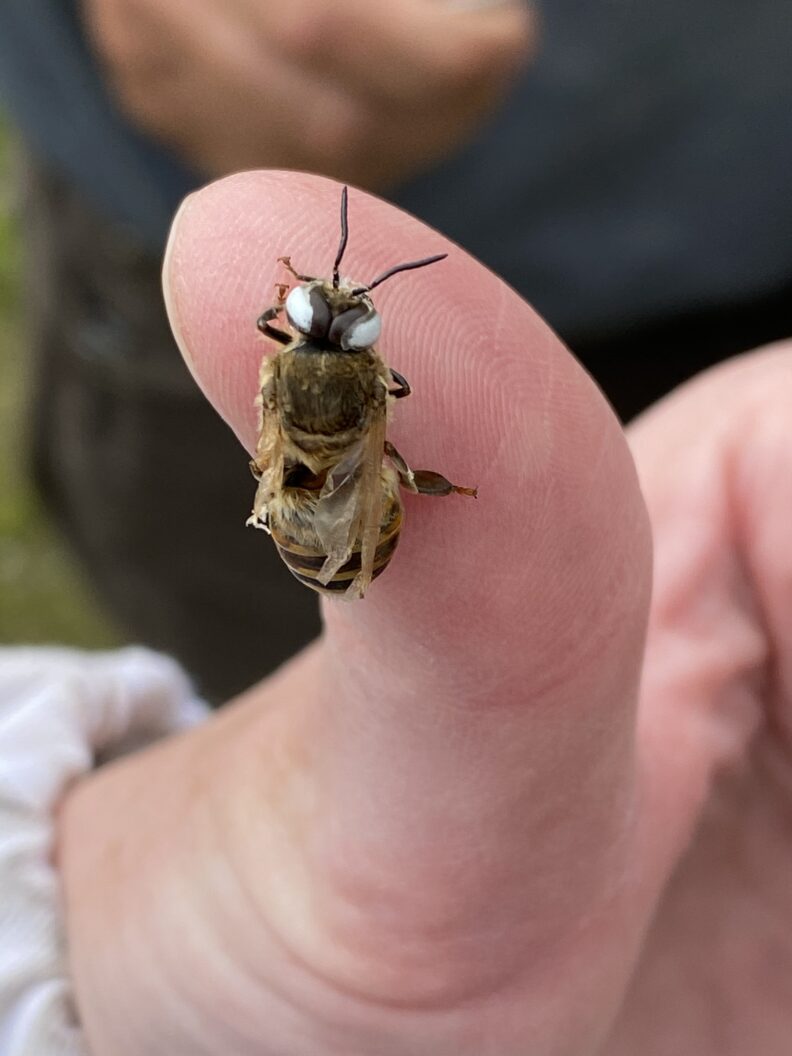
Honey bees are subject to many stressors including viral, bacterial, and fungal pathogens. Use these tools to learn how to diagnose common ailments.
Information about Tropilaelaps
Tropilaelaps sp., also referred to as ‘tropi mites’ use various species of honey bees, including Apis mellifera, the Western honey bee as hosts. As of October 2024, Tropilaelaps have not been observed in North America.
Tropilaelaps mites harm honey bees by feeding on developing bees, which can lead to shorter bee lifespans, and vectoring viruses, including deformed wing virus. The Apiary Inspectors of America, Honey Bee Health Coalition, Pollinator Partnership, Project Apis m., Auburn University, U.S. Department of Agriculture (USDA) Animal and Plant Health Inspection Service and USDA-Agricultural Research Service recently released a Tropilaelaps fact sheet that describes the mite’s life cycle, what the mite looks like, and what to do if you suspect the mite in your honey bee colonies.

US Beekeeping Survey: Colony Loss and Management

The Bee Informed Partnership (BIP) is no longer administering an annual honey bee colony loss and management survey. Auburn University and Apiary Inspectors of America have created a survey that continues long-term monitoring of key aspects of the US beekeeping industry by complementing BIP’s efforts over the past 15+ years.
As a Citizen Scientist, you can contribute your own data to these monitoring efforts. All US beekeepers age 18 and over – from hobbyists to those running multi-state commercial operations – are invited to participate. The survey will take 15-30 minutes to complete.
APHIS National Honey Bee Survey
The USDA Animal Plant Health Inspection Service (APHIS) National Honey Bee Survey is a comprehensive examination of colonies throughout the United States each year. The survey addresses concerns about diminishing health in honey bees and invasive threats to honey bees. For more information about this program, see ushoneybeehealthsurvey.info or the USDA APHIS website.

How to register your hives with the WSDA

Beekeepers are required to register their name, address, phone number, and number of hives they own each year. Registration fees that are collected by the Washington State Department of Agriculture (WSDA) are pooled into an account directed by the Washington Apiary Advisory Committee, and all funds within this account can only be spent on apiary activities by WSDA or honey bee research. Among other entities, WSU Bee Program has applied and utilized funds from this account to research ways to improve honey bee health.
Honey Bee Health Coalition
The Honey Bee Health Coalition brings together beekeepers, growers, researchers, government agencies, agribusinesses, conservation groups, manufacturers, and consumer brands to improve the health of honey bees.
Click on the links below!
Project Apis m.

Supporting Veteran Beekeepers in Western Washington
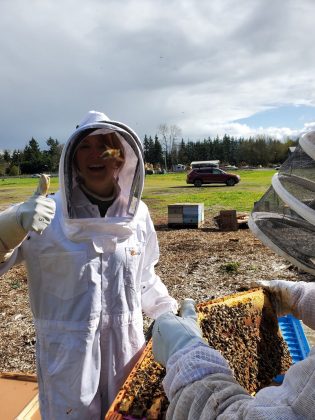
Photo courtesy: GRuB.
Credit: Mary Ellen Psaltis, Thurston Talk
Funded through the USDA’s Beginning Farmer & Rancher Development Program, and in partnership with Garden Raised Bounty (GRuB), the Washington State Beekeepers Association (WASBA), and the Washington Farmer Veteran Coalition (WA-FVC), Healing Through Hives aims to support a new generation of Veteran beekeepers and Veteran-owned apiaries across Western Washington.
Healing through Hives recognizes the importance of providing meaningful opportunities for veterans to continue to serve their communities after their military service has ended. Beekeeping not only offers a way for veterans to contribute to the agricultural sector and support local food systems, but it also provides therapeutic benefits that can help veterans overcome the physical and mental challenges associated with their service.
Visit their website for more information and how to get involved!